



Are you a dentist getting ready to sell your dental practice? Congratulations! You have some exciting plans for your future, so let’s make sure they’re well-funded. At this important turning point, you may be wondering how to attract the best offers with the least stress on yourself. Don’t worry, we’ve seen a lot, and we can help with that.
Whether you’re planning for retirement, burned out, pursuing new growth opportunities, or you’ve caught the interest of a DSO, selling your dental practice is an exciting milestone—and also a complex transition to manage.
You’re transferring ownership, management, and care of your office space or building, medical and office equipment, your administrative and clinical staff, and your patients, perhaps to a total stranger. And you might want it completed as quickly as possible, but hold your horses.
The dentists who get the best price for their practice are the ones who don’t rush to market.
The dentists who get the ideal outcomes when selling their practice are the ones who prepare early, get the right guidance, know their numbers, and approach the sale with a clear plan.
At DCS, we’ve advised dental practices on how to move through the selling process smoothly. Many dental offices we work with will come to us when business changes happen and ask how they should move forward with profitability in mind.
We support profitability for dental practices of all sizes and types. It’s important to stay organized and move through your checklist with precision as you prepare to sell your practice. And the key aspects of this checklist actually aren’t as complicated as you might think.
3 key takeaways from preparing to sell your dental practice:
- Selling your dental practice successfully starts with early legal and financial preparation to protect your value and avoid costly delays.
- Buyers pay close attention to clean financials, strong collections, and organized operations, making consistent AR management essential before you list your practice for sale.
- Transparent communication with your dental team helps preserve stability, maintain patient and buyer confidence, and support a smooth transition of ownership.
Key #1: Hire the right legal and finance professionals to help you prepare
First things first: Make sure you are following legal and financial protocols for the transfer of ownership for a medical practice.
Your dental practice is presumably your largest asset and source of revenue. There are plenty of moving parts involved in selling a dental practice, but none are more important than protecting yourself legally and financially. This is not a transaction you want to navigate without professional guidance.
Your first step: Bring in an accountant and a lawyer who are experienced in the sale of dental practices.
Why you need a lawyer to sell your dental practice:
Selling a dental practice is a regulated, high-stakes business transaction. Errors at even the early stages of selling your practice can delay closing, weaken your negotiating position, or reduce your final sale price.
Proper preparation creates leverage and peace of mind with a better chance of getting the best price.
You will need a mergers and acquisitions (M&A) lawyer to help you get your practice accurately priced, make sure selling prices are fairly negotiated, and draw up and administer the piles of paperwork needed to get the sales process started.
They will also advise you on how to continue working at your practice after the sale. It’s common for dentists to sell the equity of their practice and continue to work there on retainer. A lawyer will help you negotiate and figure out the specific terms of your sale, as every sale is different.
Your lawyer is also there to ensure you understand all the nitty-gritty details in your sales contracts. For example, they will not only help negotiate the price of your dental practice but also what will—and will not—be included in the sale.
Why you need an accountant to sell your dental practice:
You probably already have an accountant monitoring the flow of money into and out of your practice. Whether or not you’re in a great financial position already, you want to ensure that the sale of your practice improves your finances for the future.
Does this sale kickstart your retirement? Are you looking to start a different practice in a new place? No matter your reason for selling your practice, an accountant is your best friend for knowing what to expect from the sale and keeping you financially conscious of what to do next.
Your accountant will help set practical expectations by evaluating your practice’s:
- Profitability and revenue trends
- Buyer appeal and valuation drivers
- Tax implications of the sale and post-sale planning
Read more: 5 reports that are vital for running a successful dental practice
Key #2: Clean up your dental office—both physically and financially
Once the legal and financial groundwork is in place, it’s time to focus on how your practice looks and runs day to day. Just like when selling a house, you’ll need to make your place of business as desirable as possible for a buyer if you’re to get the best price.
This means a tidy office—and also a tidy financial situation as shown in current, accurate financial reports that prove your production and collection rates. 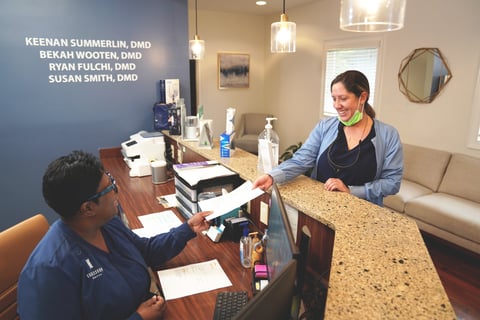
Buyers value stability over reinvention. They want a practice that is stable, organized, and ready to operate, not one that requires big or immediate fixes. For the best possible price, you want your dental practice to be “move-in ready” and not a “fixer-upper.”
On the surface, this looks like:
- A clean, well-maintained office
- Fully functioning equipment
- Organized workflows and documented systems
For the savvy buyer, a picture-perfect office is just the icing on the cake. They’ll primarily be looking for clear processes, from scheduling to patient flow, that signal your practice is well managed and will be easier to step into.
A strong patient experience supported by efficient office systems adds to the perceived value of your dental practice.
Now let’s dig beneath the surface for something else that needs to be squeaky clean…
Clean up insurance and patient accounts receivable
Accounts receivable health is one of the first areas buyers scrutinize. If your practice has a large, aging A/R, that can quickly turn their interest into hesitation—or unfavorable negotiation.
No one wants to inherit hundreds of unpaid insurance claims or five- to six-figures in uncollected patient payments that may not be collectable.
Look at your current collections reports and ask yourself:
- Are insurance claims being worked consistently, at least 2 or 3 times every month?
- Are patient balances addressed in a timely manner, or are follow-up and outreach on overdue accounts put off for weeks… or months?
We know these can be loaded questions. Maintaining a clean aging report is ideally a priority at your dental practice, but staffing shortages, busy schedules, and inefficient systems make it difficult for many teams to keep up.
Because insurance companies have mastered tactics for stalling reimbursement, in-house billers can struggle to stay on top of the flood of payer denials, downgrades, and requests for information. As a result, your practice’s long list of uncollected revenue just keeps getting longer.
Resolving your aging A/R for both insurance and patients is a tough task to tackle, but it needs to be done to get top dollar for your practice. Cleaning up a year of unpaid claims in just a month or two would be stressful for any team, but with the right help, it can be painless.
DCS Special Projects is a surefire solution to cleaning up your A/R for a sale without overworking your staff or disrupting your daily operations.
Our experienced insurance billing specialists will evaluate your accounts receivable and dive into making phone calls, filing appeals, and resubmitting claims to convert those old claims into cash and clean up records and revenue for the new owner.
On a short-term project basis, our teams will work in partnership with your team to strengthen your collection percentage, cash flow predictability, and overall financial consistency.
For your patient payments, consider the automated ease of QuantaPay, which offers a free terminal for in-office payments, plus AI-driven outreach that sends text and email reminders with links to a payment portal that accepts cards and digital wallets. It even handles the write-back and bank deposit, which makes patient collections hands-free for your team and the new owner.
Read more: Dental patient care or tackling high dental A/R: Which is priority #1?
Key #3: Prepare your dental teams to enable a smooth transition
Like many dentists, you may find this to be the most emotionally challenging step. It will be emotional for your team members, too, which makes this step a delicate one.
Your team is your dental practice’s most valuable asset, and it’s also the most fragile. A buyer seeking a “move-in ready” situation will want your team intact, but some members of your team may feel so uneasy about a new practice owner that they leave the practice—maybe even before the sale!
The sensitivity of this scenario means being considerate about how and when you tell your team that you’re selling the practice they’ve helped build. Unfortunately, we’ve seen what happens when dentists are not transparent with their teams about this major change that impacts their lives.
When the business sale happens by surprise, everyone on the team is caught off guard, and people often leave or refuse to put any effort toward smoothing the transition. This leaves the buyer with the heavy burden of hiring, onboarding, and training new staff without doing more harm to the office culture.
A healthy, stable team culture is an asset—something buyers want to inherit, not rebuild.
You may intend to take your entire team with you to start a new practice. But even then, you should clearly and carefully communicate these upcoming changes to your team to encourage a peaceful, uneventful sale.
Why you should communicate the sale of your practice to your team professionally, proactively, and as soon as possible
You don’t need to share every detail immediately, but timing and tone do matter. Thoughtful communication allows your team to:
- Prepare for ownership changes
- Ask questions and express concerns
- Meet new leadership when appropriate
You may find that some of your people want to stay and build a good rapport with the new owner and staff they may bring with them, while one or more employees will decide to leave.
Either way, you and the buyer have less uncertainty about the personnel at the practice.
By being proactive, considerate, and open earlier in the sales process, you and the buyer will know early on which roles will need to be filled.
You can get the best price for your practice and have a smoother transition
To recap, here are 3 key tips for selling your dental practice:
- Key #1: Hire the right legal and finance professionals to help you prepare
- Key #2: Clean up your dental office—both physically and financially
- Key #3: Prepare your dental teams to enable a smooth transition
Most dentists who sell their practice do so after several years of working with the same people—sometimes for decades. It’s a big life change, and it can become extremely stressful for you and your team members.
However, with the proper guidance and support, especially with clearing out old claims and lowering a high A/R to a manageable amount, you can move through the selling process with ease.
Having the expert support of attorneys, accountants, and A/R specialists will make the difference between a stressful sale and a successful sale.
Book a free 30-minute consultation with DCS to learn more about how our A/R Special Projects Services can prepare you and your team for the sale of your dental practice.

Related Posts
Dental revenue resources from Dental Claim Support