
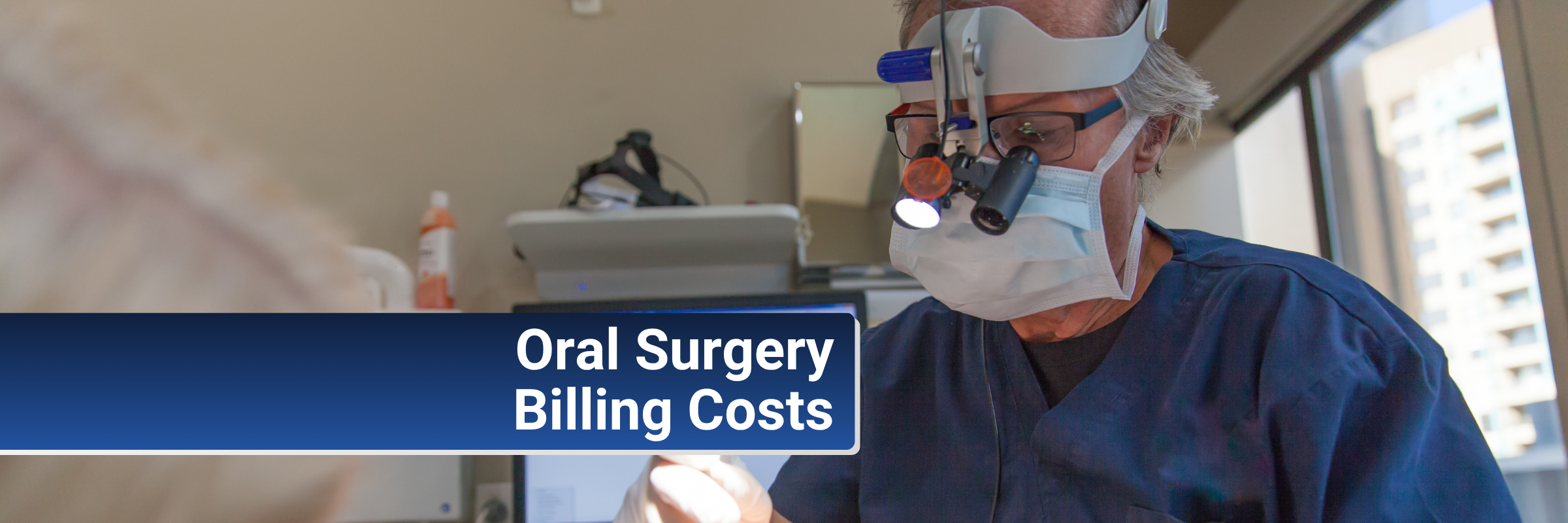


When oral surgeons compare billing service pricing, one question comes up frequently: Why does oral surgery billing cost more than general dental billing? We get it. You might be thinking, “I’m getting the same service as general dental billing, why is Dental Claim Support (DCS) charging more?” As you probably know, OMS billing is a bit more complicated.
At first glance, both oral surgery and general dentistry practices involve insurance claims, payments, and accounts receivable. A claim is a claim, right? Well… not exactly.
Behind the scenes, oral surgery billing requires significantly more expertise, documentation review, claim coordination, ongoing education, and payer knowledge than traditional dental billing. The stakes are also much higher. A coding error, missing document, or improperly submitted claim can result in thousands of dollars in lost reimbursement.
To understand oral maxillofacial surgery (OMS) billing more deeply, we spoke to DCS’ Senior Account Manager in OMS, Angela Moorman-Rakestraw. She has worked with OMS offices for 20+ years, has Certified Professional Coder (CPC) and Certified Professional Billing (CPB) certifications, and also has a Certification in Plastics and Reconstruction Coding (CPRC) to specialize in plastics and reconstructive surgery coding.
As you can see, her experience speaks for itself. But we wanted to hear directly from her why oral surgery billing costs more than general dental billing.
Key takeaways on the cost of oral surgery billing services:
- Oral surgery billing involves significantly more complexity than general dental billing, including medical insurance coordination, detailed documentation requirements, and specialized coding knowledge.
- Because oral surgery procedures often carry higher reimbursement amounts, billing errors, denials, and downcoding can have a much greater financial impact on practice revenue.
- Investing in a specialized oral surgery billing team helps practices maximize reimbursement, reduce costly mistakes, and navigate constantly changing insurance and compliance requirements.
1. Oral surgery billing isn't just dental billing
One of the biggest misconceptions about oral surgery billing is that it's simply dental billing with a different set of procedure codes. In reality, oral surgeons operate in a completely different reimbursement process.
As specialists, oral surgeons receive higher reimbursement rates from insurance carriers. Procedures are more complex, often require medical necessity, and the revenue attached to each claim is significantly greater than what is typically seen in general dentistry.
According to Angela, that difference starts with insurance.
"The insurance companies give oral surgeons a higher reimbursement level if they're credentialed as a specialist within the networks. Oral surgery has higher rates because they are specialists, and there are more complex cases involved."
Because the reimbursement opportunities are larger, mistakes become much more expensive.
Take a common wisdom tooth extraction case. Depending on the complexity of the extractions and sedation involved, a single case can range from $2,500 to $4,000 or more. Missing documentation, incorrect coding, or filing to the wrong carrier can significantly impact how much of that revenue ultimately reaches the practice.
Angela continues, “Every claim that's submitted carries a higher stake because there's a higher level of cost going into it from the provider's piece, there's a higher level of cost going into it from a carrier standpoint, and then just the higher level of reimbursement rate that you need."
There’s another factor that makes OMS billing more complicated: You’re almost always filing both dental and medical insurance claims for each procedure. Successfully coordinating medical and dental insurance billing is one of the biggest challenges facing oral surgery practices today.
2. Medical billing adds an entire layer of complexity
Unlike most general dental practices, oral surgery offices frequently work with both dental and medical insurance. In some cases, medical insurance may be primary, while in others, dental insurance is primary. Oral surgery billing teams have to coordinate between both.
Determining accurate claim submission isn't always straightforward. Oral surgery billers must understand:
- Medical insurance billing requirements.
- Dental insurance billing requirements.
- Diagnosis coding.
- Medical necessity standards.
- Coordination of benefits.
- Trauma-related billing workflows.
- Hospital and ambulatory surgery center billing.
DCS' oral surgery team often works directly with practices to determine where claims should be submitted before they ever leave the office.
"A lot of times, OMS teams are not generating claims to the correct insurance carrier," Angela explains. "We have to help make that determination. Does it need to go to medical first or dental first? And why?"
Submitting a claim to the wrong carrier can delay reimbursement for weeks. In more complex cases involving trauma, automobile accidents, or hospital care, reimbursement timelines can stretch into months if claims aren't coordinated correctly from the beginning.
Related: 10 standard Coordination of Benefits rules for dental insurance billing [Free guide]
3. Documentation requirements are far more detailed
One phrase came up repeatedly during our conversation with Angela:
"If it's not documented, you can't code it. If you can't code it, you can't bill it."
Documentation is the foundation of successful oral surgery billing. Accurate documentation plays a critical role in maximizing reimbursement and reducing claim denials. While general dentistry certainly requires documentation, oral surgery cases often involve significantly more clinical detail and supporting records. Depending on the procedure, billers may need to review:
- Consultation notes
- Comprehensive medical histories
- Operative reports
- Anesthesia records
- Pathology reports
- Hospital records
- Trauma documentation
- Radiographs
The complexity stems from the fact that many reimbursement decisions are based on a patient's overall health status and medical necessity. For example, a patient's diabetes, hypertension, airway concerns, or anxiety diagnosis may influence:
- Whether sedation is covered
- Whether treatment can be performed in-office
- Whether treatment requires a hospital setting
- How diagnosis codes are reported
- Whether medical insurance will reimburse the procedure
Angela explains:
"Knowing how to read through medical history and knowing that high blood pressure is hypertension, how do you turn that into a diagnosis code to put on a claim? That's an important part of the process."
Keeping up with documentation means handling a lot of moving pieces, which leaves plenty of room for errors. But with an experienced OMS biller in place, they’ll have the expertise to ensure every one of these moving parts is included in your insurance claims for timely reimbursement.
4. OMS claims require more hands-on work
Oral surgery billing often requires significantly more claim preparation and documentation review than general dental billing. General dental claims often follow a relatively predictable workflow, while oral surgery claims rarely do. Every claim requires careful review before submission to ensure coding, documentation, attachments, and payer requirements are aligned. Angela explains that the difference in workload is substantial:
"With a single general dentistry office, you may spend 30 to 45 minutes sending claims. With an oral surgeon, you may spend two hours sending claims."
Why? OMS billers are reviewing documentation, selecting diagnosis codes, attaching medical records, validating anesthesia documentation, checking carrier-specific requirements, and ensuring claims are clean before submission.
Related: Dental clinical notes: 3 reasons they are crucial to your success
In many cases, DCS' OMS team is reviewing operative reports before claims are sent to identify potential reimbursement risks. For example, if documentation only references the use of forceps and elevators, a carrier may interpret the procedure as a simple extraction. However, if the provider performed bone removal or sectioned the tooth, that information must be clearly documented.
"If it's going to downcode your tooth, that's going to be less money that you're getting from the provider for the same amount of work that you've done," Angela says.
Identifying these issues before submission helps prevent unnecessary revenue loss.
5. Appeals require specialized clinical knowledge
Appealing an oral surgery claim isn't simply sending a letter, correcting a code, and asking for reconsideration. Successful appeals often require a deep understanding of:
- Clinical terminology.
- Oral surgery procedures.
- Radiographic interpretation.
- Coding guidelines.
- Medical necessity requirements.
A biller may need to review x-rays, analyze operative reports, evaluate documentation, and translate clinical findings into language an insurance carrier will accept. Angela gets specific:
“You have to know how to read that X-ray. You have to determine what this actually looks like from a radiological standpoint. You're basically telling a story about this patient to the insurance company, and you're converting that story into numbers and letters through the codes so the insurance company can translate it back into the story."
That level of interpretation requires expertise that goes far beyond standard claim follow-up.
Read more: Elevate your oral surgery practice efficiency: 10 tips for maximum success [Free guide]
Guidelines, codes, and regulations regularly change
Our DCS OMS team stays current on:
- CPT code updates.
- ICD-10 diagnosis code changes.
- Insurance carrier policy changes.
- State regulations.
- Medical necessity requirements.
- Anesthesia guidelines.
These changes occur often enough that it can be difficult to keep up with.
According to Angela, "Codes are updated twice a year for procedures and once a year for diagnosis codes. State laws and state guidelines are changing constantly, and national guidelines change constantly."
Without a team actively monitoring these changes, practices risk denials, compliance issues, and lost reimbursement opportunities.
Get DCS’ Oral Surgery Billing services for your OMS practice
To recap, here are 5 reasons DCS’ Oral Surgery Billing Services are more expensive than general dental billing services:
- Oral surgery billing isn't just dental billing.
- Medical billing adds an entire layer of complexity.
- Documentation requirements are far more detailed.
- OMS claims require more hands-on work.
- Appeals require specialized clinical knowledge.
At DCS, oral surgery billing is handled by a dedicated OMS team trained specifically in:
- Medical and dental billing coordination.
- Oral surgery coding.
- Trauma billing.
- Hospital billing
- Appeals management.
- Ongoing education and certification.
As Angela explains: "It's not as simple as just outsourcing a service. It's an investment."
That investment protects your revenue, reduces costly errors, improves reimbursement outcomes, and helps ensure your practice receives payment for the work you've performed. To take the next step in protecting your OMS practice’s revenue, book a free 30-minute consultation with DCS today.

Related Posts
Dental revenue resources from Dental Claim Support