
.jpg)


When collections begin to drop, it can feel like a slow burn. But the impact is undeniable, and eventually, that slow burn turns into a huge problem that negatively impacts every facet of your dental business. If your collections dropped in 2025, look to the future rather than be frustrated by the past: what can you do to improve your dental practice collections in 2026?
Low collections are to blame when your cash flow slows, your practice’s A/R creeps higher, and suddenly you’re struggling to make payroll, juggling vendor payments, putting off equipment repairs and replacement…
It’s overwhelming when there’s so much to do and not enough cash to do it. Your team will start to feel that growing tension as well, and so will your patients.
Because low collections don’t just strain your financial stability. They disrupt your schedule, your team, and your growth plans—they make a mess! And they’re a problem that starts outside your office.
Both economic shifts and inflation have influenced most people’s buying behavior, and that includes dental patients. According to Bakerstreet Dental—
“A survey conducted by OnePoll found that more than 50% of participants have delayed (medical and/or dental) treatment because they feared they would be unable to pay the bill. Although missing out on seeing a doctor or a dentist may save money in the short term, the risk of complex issues increases, and patients could therefore end up paying more.”
You can’t control the economy, but you can enlist your team to proactively reach out to patients to schedule treatment, explaining that the sooner it is done, the less it will cost.
But an increase in production does not guarantee an increase in collections. We’re here to ensure that you actually receive all the money you work for.
So, as the year winds down and you’re reviewing your dental practice’s performance for 2025, see if one or more of these explain why your collections are down, then note your next steps to reach higher collections in 2026.
Key takeaways for improving dental practice collections:
- Low collections strain your practice’s cash flow and put avoidable pressure on you and your team.
- The primary drivers behind declining collections are patient payment delays, insurance slowdowns, and staffing disruptions.
- With stronger processes, automation, and expert billing support, your practice can rebuild predictable, consistent collections in 2026.
Reason #1: More patients are selecting payment plans and delaying payments
With inflation and increased living expenses, many people are struggling to pay for groceries, let alone dental treatment. This means they’re opting for payment plans or simply putting off paying their dental bill for as long as possible.
What’s sticky about collecting from patients is you’re dealing with real people facing real financial challenges, not a faceless, billion-dollar insurance company that’s merely hell-bent on keeping your money. You approach your patients with a compassion you don’t need for a profit-focused corporation.
As an excellent dental provider, you want to be sensitive to each patient’s unique situation. Unfortunately, this leniency in patient billing leads to dips in collections.
How delayed patient payments affect your practice:
- Cash your practice depends on is unavailable.
- Slower cash flow, especially with large treatment cases.
- Time-consuming manual follow-up for your team, pulling them away from in-office patient care.
Here’s the thing—the solution isn’t to be ultra-confrontational or uncaring with patients who have billing questions or money concerns. Instead, here’s how to support your patients and your practice:
How to get patient payments quicker and more often in 2026:
- Have upfront financial conversations with your patients and provide transparent estimates so they understand their responsibility.
- Offer flexible payment options, including payment plans that match patients’ budgeting needs.
- Automate patient billing reminders so they’re sent consistently, even when your office is closed for the holidays.
- Use digital statements and online payment portals to make paying easy and immediate.
When you set clear expectations, take time to create a budget-friendly plan, and use today’s technology to make paying as easy as possible for your patients—and your team—you’ll get paid faster.
Reason #2: Insurance delays and added administrative hurdles
You probably saw this one coming from a mile away: dental insurance companies make it increasingly difficult for you to be reimbursed from the initial claim submission. Typically it requires time-consuming follow-up, from phone calls with hours on hold to resubmitting dozens or hundreds of claims again and again.
Claims management is a massive hurdle for dental teams, but claim reimbursements are often 50% of overall revenue for an in-network provider—it’s not optional.
How dental insurance hassles and hurdles affect your practice:
- Revenue trapped in aging claims limbo until it’s unrecoverable.
- Increased risk of lost revenue through write-offs.
- Administrative burnout—and subsequent turnover—as your team chases EOBs, resubmits claims, and wrestles with appeals.
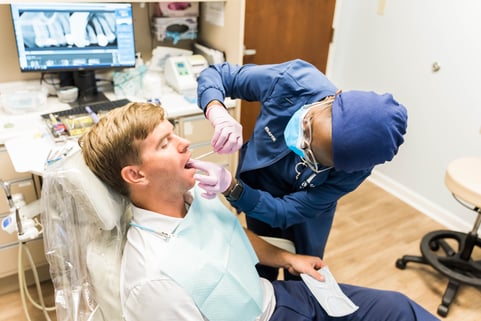
Most dental team members we’ve spoken to hate dealing with dental insurance, and they view claims work, specifically filing appeals, as their least favorite task. But consistent action on unpaid claims is vital for steady cash flow and a healthy bottom line—no one wants to do it, but it must be done.
How to optimize dental claims filing and collections in 2026:
- Strengthen insurance verification protocols to catch coverage and eligibility issues before their appointment.
- Optimize documentation, including narrative templates and attachment checklists, to reduce denials.
- Execute an unpaid claims follow-up system weekly or outsource to a dental billing expert who will.
Dental insurance billing isn’t going to get easier. For consistent collections and cash flow, your practice will need to dedicate at least one skillful person to this task or partner with a third-party dental billing vendor with the expertise to manage claims for you.
Just one improvement in your verification and claims workflow can recapture thousands in lost reimbursements. Imagine the monthly revenue boost if your team—or ours—perfected it all.
Read more: Yes! Outsource your dental billing—but to a company or a remote employee?
Reason #3: High staff turnover and the continued staffing shortage
The health industry’s staffing shortage is a problem particularly rampant in the dental industry.
Many practices are assigning their vital dental insurance claims tasks to team members with little to no billing experience—even clinical staff who are already stretched thin. As a result, claims and collections work is incomplete, incorrect, or incoherent.
Inconsistent staffing leads to inconsistency in how your billing is handled, especially when there’s a lack of experience.
How inexperienced dental billers affect your practice:
- Claims submissions are delayed or slip through the cracks.
- Patient statements pile up and aren’t followed up.
- A/R rises stealthily until its management becomes overwhelming.
- Your team is stressed and reactive instead of calm and proactive.
No one wants to feel constantly stressed or burned out at work. But inconsistency creates chaos, and chaos breeds resentment among employees.
How to file claims and manage collections effectively in 2026:
- Standardize and speed up workflows through clear standard operating procedures (SOPs) and streamlined automations.
- Prevent costly mistakes by investing in ongoing staff training.
- Partner with a dedicated dental billing vendor who can take over complex and time-intensive tasks.
This allows you to reassign administrative staff back to patient care and practice growth initiatives, where their time delivers the greatest value to your dental business.
You can’t stop members of your dental team from retiring, going on vacation, taking sick days, or leaving for another practice, but you can establish effective processes to support consistent, effective action by anyone in your office.
Here’s what to do next to prepare your practice for a stronger year
If you’ve read this far, you know all your options, but you might be wondering what to do first or what will have the largest positive impact next year.
Well, we’re all about sharing realistic, actionable to-dos.
Start here:
- Get a free A/R and collections analysis to pinpoint where in your workflow that money is getting stuck.
- Prepare your team and your patients for insurance calendar-year resets, deductible changes, and
 eligibility shifts.
 - Set up or enhance automated patient billing systems to speed up payments and reduce manual work.
- Bring in the DCS Special Projects team to clear your dental insurance claims backlog, resolve past-due claims, and organize your patient management software (PMS).
- Outsource to a trusted dental billing vendor to maintain consistent collections and cash flow long-term.
You don’t need to feel stressed about making these changes in the new year. Instead, consider how great it will feel when you see your practice’s revenue grow and its cash flow sustain itself month after month.
And remember, everyone at DCS is ready to make 2026 easier for you and your team.
Our Special Projects team will recover lost revenue while clearing out your patient and insurance A/R. You’ll see an increase in collections and also a cleaner, more standardized billing process that your team can carry forward.
And if you’re looking for a more permanent dental billing solution, DCS Insurance Billing teams will manage your entire claims process continually, from verification to submission to payment posting and reconciliation. The claims process will be removed from your team’s plate, and they can finally refocus on patient care.
Read more: The cost of revenue cycle management services vs. in-house dental billing: 5 questions answered
What’s the simplest way to improve your dental practice’s profitability in 2026? Partner with DCS.
To recap, we covered 3 probable reasons why your collections were down in 2025—
- Reason #1: More patients are selecting payment plans and delaying payments
- Reason #2: Insurance delays and added administrative hurdles
- Reason #3: High staff turnover and the continued staffing shortage
Along the way, we suggested more than a dozen proven, practical ways your collections can be brought back up in the coming year.
Remember: A drop in collections isn’t a sign that you or your team have failed. It’s a reflection of industry-wide shifts and pressures that most dental practices are experiencing. What matters now is how you respond.
If you take the steps to improve your internal processes, embrace automation, and partner with experts who live and breathe dental billing, you can enter 2026 with confidence and enjoy a year with predictable, steady cash flow.
Learn how DCS can lift the burden of low collections off your shoulders: Book a free 30-minute consultation today.

Related Posts
Dental revenue resources from Dental Claim Support