
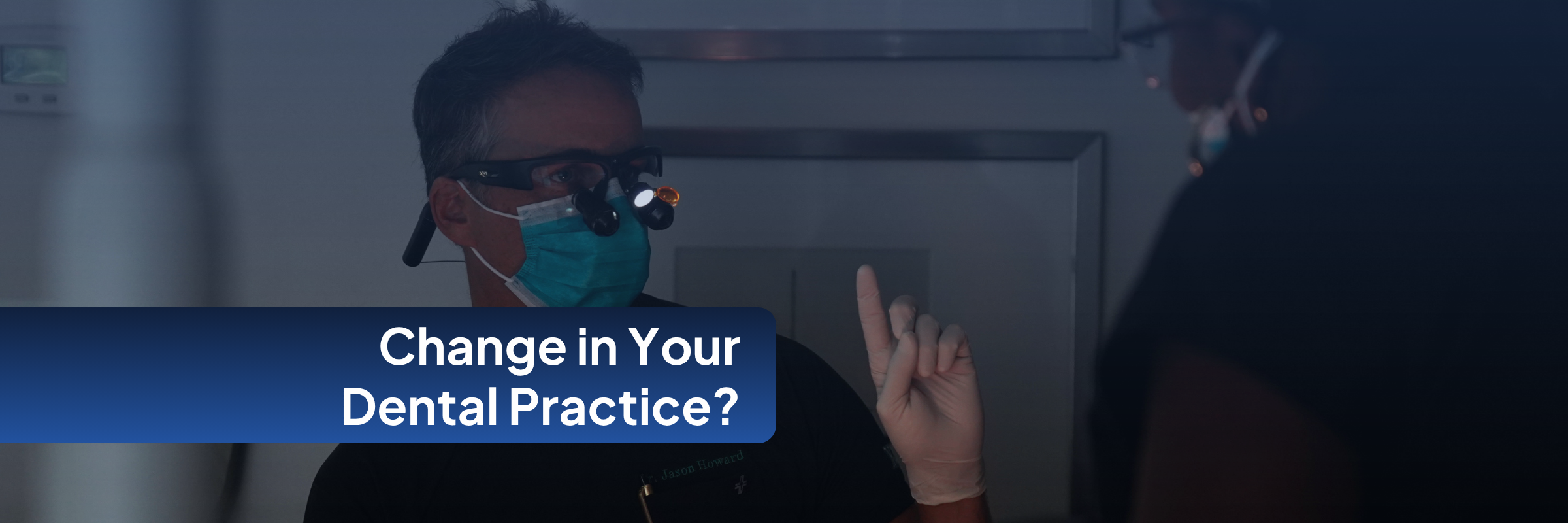


Major changes in a dental practice are often a sign of growth. Maybe you're moving to a new practice management system, opening another location, selling your practice to a DSO, or welcoming new leadership. Whatever the reason, transitions can be exciting, but they can also create significant operational disruption without the right support.
During a major change, dental billing can easily become an afterthought. Your team is focused on implementing new systems, training staff, managing new responsibilities, or simply keeping the practice running. Meanwhile, claims still need to be submitted, insurance payments need to be posted, and patient balances need to be collected.
Even a short period of disruption can contribute to unbilled claims, delayed payments, overlooked patient balances, incorrect insurance information, unclear responsibilities, and growing A/R.
[[TOC]]
The good news? Your practice doesn't have to navigate these challenges alone. DCS can provide additional billing support to help maintain revenue cycle continuity during periods of change. Here are four common dental practice transitions where additional billing support can make a difference.
Key takeaways on how DCS helps dental practices navigate change:
- Major dental practice transitions can create hidden RCM risks, including missed claims, delayed payments, and growing A/R.
- DCS can help support billing continuity through PMS conversions, location expansions, DSO sales, and leadership changes.
- The right billing support can help practices support the revenue cycle and navigate major changes with less billing disruption.
1. Dental practice management system (PMS) conversion
A practice management system (PMS) conversion affects far more than scheduling and patient records. Your billing and revenue cycle processes depend on the information stored in your PMS, including insurance information, outstanding claims, patient balances, payment history, and financial reporting.
When that information doesn't transfer correctly or your team isn't sure how to manage billing in the new system, problems can quickly arise. For example, outstanding claims may be overlooked, patient balances may not carry over correctly, or insurance information may be missing or outdated.
Staff may be unsure whether a particular task belongs in the old system or the new one. Even payment posting can be delayed while everyone adjusts to new workflows.
How DCS helps:
DCS has helped many dental teams with software conversions. Senior Account Manager of Special Services Jeff Smith leads the DCS team that manages these conversions.
He explains, “Conversions are often messy, but if you’re in the mindset of checking everything and making sure things are transferred accurately, you’ll get to a streamlined place where you can enjoy and optimize your new software.”
Our experts can help you prepare for the conversion, support data transfer, and provide billing support after the transition while keeping A/R top of mind. By supporting your billing and collections processes during and after your conversion, DCS helps support billing continuity so your team can focus on adapting to the new system while the revenue cycle continues to receive attention.
2. Opening another dental practice location
Opening or acquiring another dental practice location is an exciting opportunity for growth. But adding a location also means adding another set of patients, claims, insurance plans, providers, staff, billing workflows, and A/R.
It's easy to assume that the processes that work for your existing location will automatically scale to another office. In reality, expanding your practice can introduce new RCM challenges that are easier to address with clear processes from the beginning.
For example, your team may need to establish consistent billing workflows across locations, establish processes for submitting claims under the new location, and manage provider and payer information. Leadership also needs visibility into A/R and collections across multiple offices.
At the same time, someone still needs to own follow-up on unpaid claims and patient balances, and it's not always clear who owns those responsibilities when a new location is getting up and running.
Related: 3 keys to selling your dental practice for top dollar with ease
How DCS helps:
DCS helps dental practices and groups as they open additional locations, supporting them in establishing and standardizing billing processes across their organization. Our team can also help manage ongoing billing work that comes with a growing practice, including claims and A/R follow-up. This can give your internal team more capacity to focus on the operational demands of opening and running the new location.
3. Selling to a dental service organization (DSO)
Selling a dental practice to a DSO can bring significant changes to your operations, systems, staffing, and revenue cycle processes.
During an acquisition, there's a lot happening at once. Leadership and staff may be learning new systems, adapting to new reporting requirements, and figuring out who is responsible for different parts of the billing process. With so many moving pieces, billing responsibilities can easily get lost in the shuffle.
That's a problem because your existing revenue cycle doesn't stop just because ownership is changing. Claims still need to be submitted and followed up on. Insurance payments still need to be posted. Patient balances still need to be collected. And outstanding A/R still needs attention.
Related: DSOs on the rise: What’s driving more dentists to sell their practices?
How DCS helps:
Our Enterprise Solutions bring DCS's specialized project support and solutions for larger groups and DSOs together under one flexible service offering. We provide a broad range of support options for complex billing challenges for dental practices, multi-location groups, DSOs, and growing organizations. You get:
- Revenue cycle support across multiple locations
- Support for greater visibility into billing and A/R performance
- A team that understands your organization's workflows
- Support without adding internal billing headcount
- Billing processes designed to support growth
That flexibility can be especially valuable when a practice is selling to or joining a DSO and billing responsibilities, systems, and workflows are changing at the same time.
4. Leadership or ownership change
A change in leadership can bring fresh ideas, new processes, and new opportunities for a dental practice. Whether a dentist takes ownership, an office manager steps into a leadership role, or the existing leadership team changes, transitions can be an opportunity to improve how the practice operates.
But they can also leave important billing responsibilities unclear.
A new leader may inherit billing problems they didn't know existed. They may not know the current status of A/R , which claims are outstanding, or whether the practice has a consistent process for following up on unpaid accounts.
How DCS helps:
DCS can provide billing continuity while responsibilities are changing hands. Our team can help new leadership understand the current state of the practice's revenue cycle and identify opportunities for improvement. That may include identifying A/R that needs additional attention, following up on outstanding balances, or taking ownership of billing responsibilities that don't have a clear internal owner.
For practices going through a leadership transition, having experienced dental billing professionals available can also reduce the pressure to immediately hire and train additional staff just to keep the billing process moving.
Change happens: DCS can help you navigate the transition
To recap, here are four transitions DCS can help dental teams navigate:
- Dental practice management software conversion
- Opening another dental practice location
- Selling to a dental service organization (DSO)
- Leadership or ownership change
Change is a natural part of running and growing a dental practice. Practices change ownership, add locations, switch technology, join DSOs, and evolve their leadership teams.
What shouldn't get lost in the transition is the revenue cycle you've already worked to build.
The right RCM support can help maintain billing continuity, identify areas that need attention, reduce billing disruption, and give your practice a stronger revenue cycle foundation for what comes next.
Through DCS Enterprise Solutions, practices, groups, and DSOs can access flexible support for specialized projects and larger organizational needs without outsourcing more of the revenue cycle than they need to.
Preparing for a major transition? DCS can help. Book a call with DCS to talk through your current billing process and determine where additional support may help maintain revenue cycle continuity during the transition.

Related Posts
Dental revenue resources from Dental Claim Support